Copernicus: 2026 almost certain to exceed 1.5°C, October the warmest on record and El Niño strengthening
The C3S climate bulletin of 11 November 2026 says 2026 is almost certain to pass 1.5°C above the pre-industrial level, with October the warmest October on record.
This article was prepared with AI assistance from the official sources listed below, and checked automatically before publication.

The Copernicus Climate Change Service (C3S) released its latest Climate Bulletin on 11 November 2026, stating that 2026 is now almost certain to exceed 1.5°C above the pre-industrial level. This makes 2026 the second year on record to pass that threshold, after 2024. The global average temperature for the 2023–2026 period is also expected to exceed 1.5°C.
Key findings in detail
According to C3S, the global average surface air temperature in October 2026 reached 15.35°C, or 1.75°C above the 1850–1900 baseline. This makes it the warmest October ever recorded, and the third consecutive month to exceed 1.5°C relative to the pre-industrial reference.
Based on statistical predictions using ERA5 data up to October, 2026 is most likely to be the second-warmest year. The chance of matching or exceeding 2024, currently the warmest year, is about one in five.
Other points from the bulletin:
- Sea surface temperature outside the polar regions (60°S–60°N) in October reached 20.95°C, a record for the month and the fifth consecutive month with a monthly record.
- The monthly average sea surface temperature in the Niño 3.4 region, the area used to monitor El Niño, hit a record 29.94°C, surpassing the peak of previous very strong El Niño events.
- Very low river flows persisted in central and eastern Europe, affecting the Rhine, Danube and Vistula.
- Antarctic sea ice extent in October was 1.7 million km² (9.3%) below average, the second lowest for the month after 2023.
Samantha Burgess of ECMWF said that a very strong El Niño adds heat to a climate already warmed by human activity. She stressed that the four-year average expected to exceed 1.5°C shows how sustained this period of global heat is.
Why it matters
The 1.5°C threshold is often a reference point in global climate discussions. What stands out in this bulletin is not just a single hot month or year, but a persistent pattern: consecutive record sea temperatures, air temperatures above 1.5°C for three months in a row, and a four-year average that also passes the limit. The very high sea temperatures in the tropical Pacific also indicate that El Niño is still strengthening.
Relevance for Indonesia
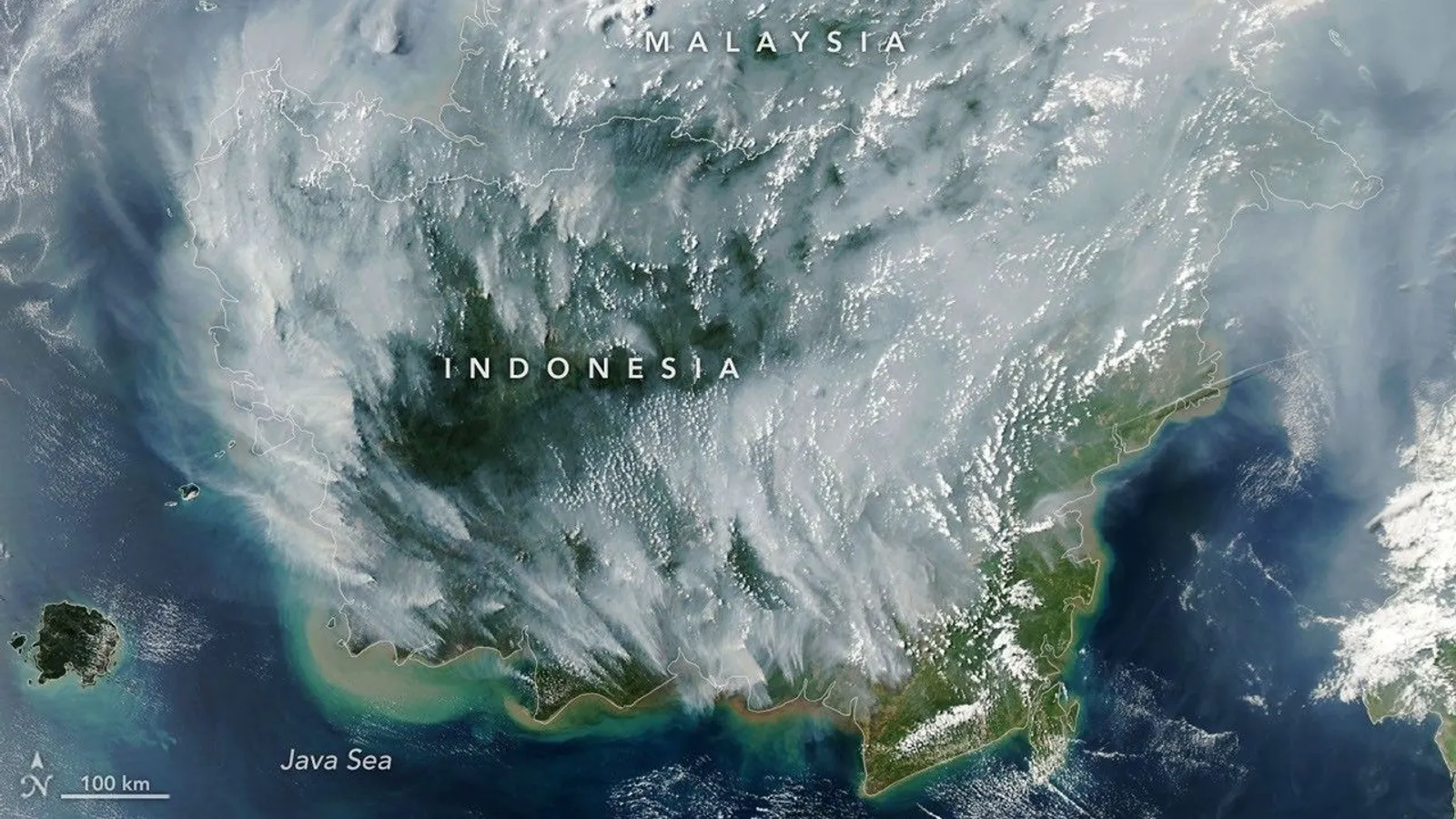
The C3S bulletin does not discuss specific impacts in Indonesia. However, Indonesia is known to be strongly affected by El Niño, which is commonly associated with drought, the risk of forest and peatland fires, and pressure on water supplies. With El Niño recorded as surpassing previous strong events, organisations in Indonesia should take a close look at their preparedness.
Some of the groups that most need to prepare:
- Central and regional government agencies responsible for disaster mitigation and water resource management.
- Plantation and forestry operators who manage land prone to burning.
- Companies whose supply chains depend on agricultural produce and water availability.
Practical steps
ERA5 data and C3S services are openly available, so they can be used as one input to local climate analysis. Organisations may consider the following steps:
- Build monitoring dashboards that combine open climate data with field sensor data, such as rainfall, soil moisture and water levels.
- Strengthen early warning systems and hotspot monitoring, especially in peat areas and concession land.
- Include El Niño and extreme temperature scenarios in supply chain planning and disaster preparedness.
- Set clear trigger thresholds and response procedures across operations, IT and risk management teams.
This C3S warning underscores that climate data is increasingly relevant as an input to operational decisions, not just background information. Organisations that prepare monitoring and response workflows early will be better placed to face a dry season that could be extreme.
Sources & references
This article is a summary and interpretation by the Oemah Solution team of the sources below. Refer to the original sources for full details and context.